

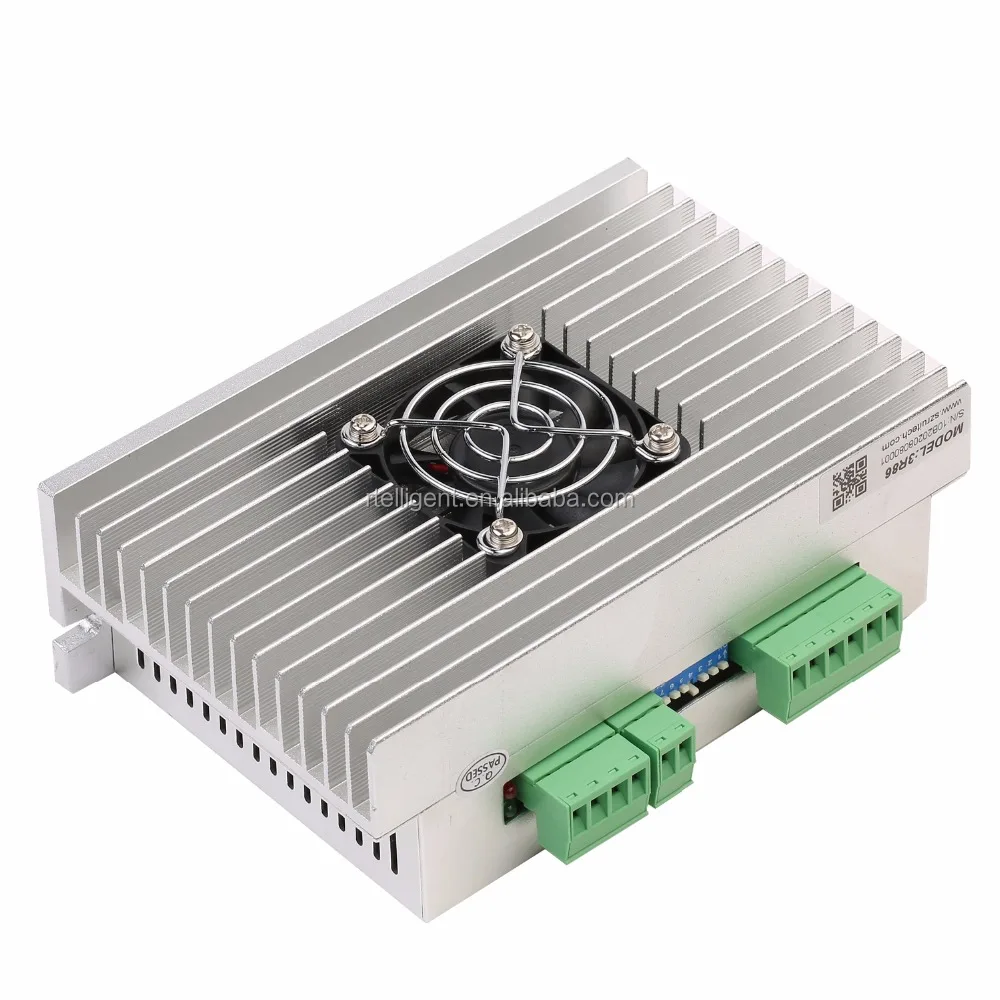
| \t Description of drive functions |
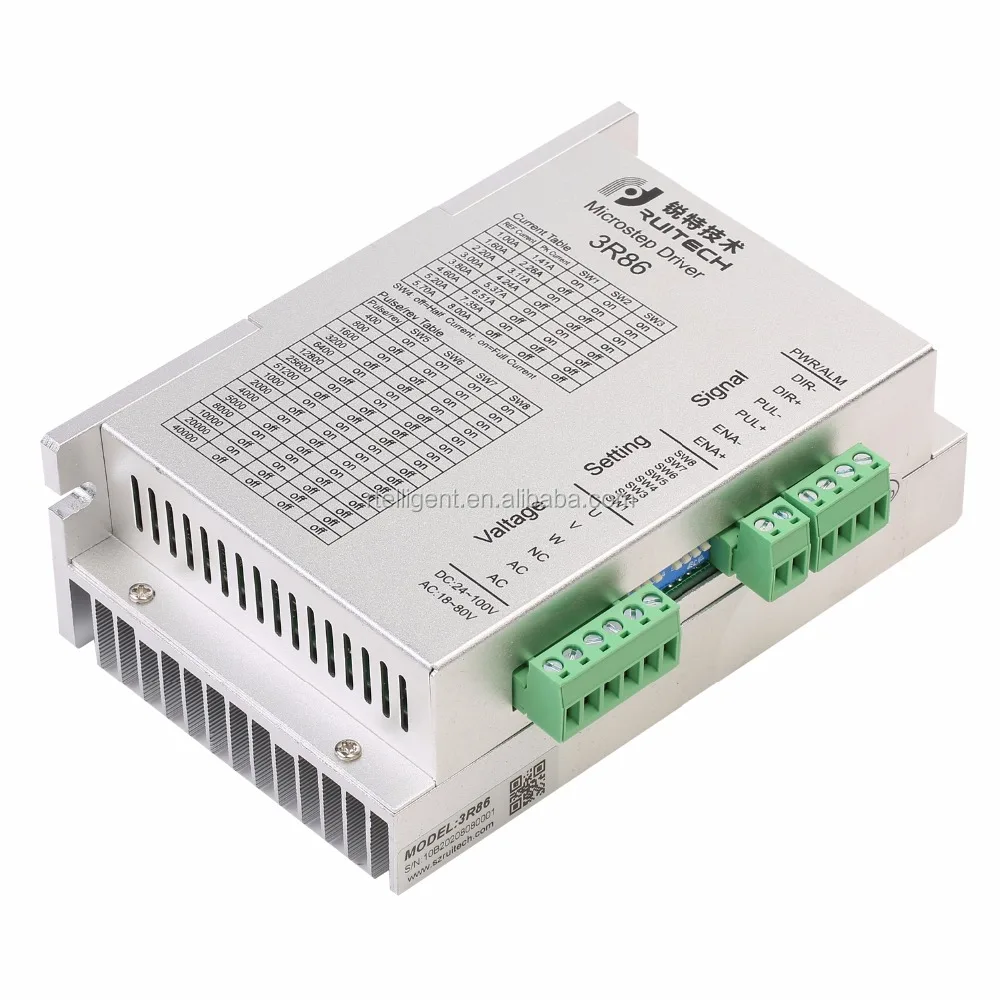
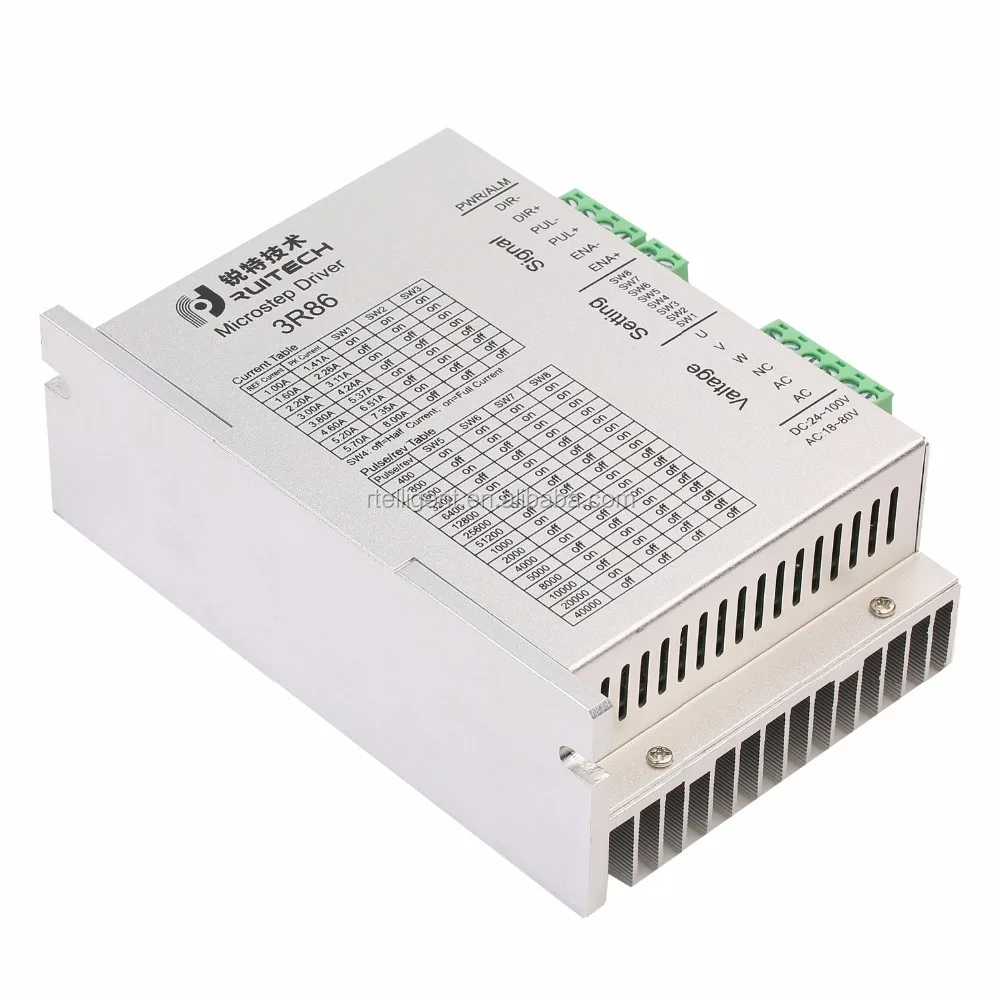
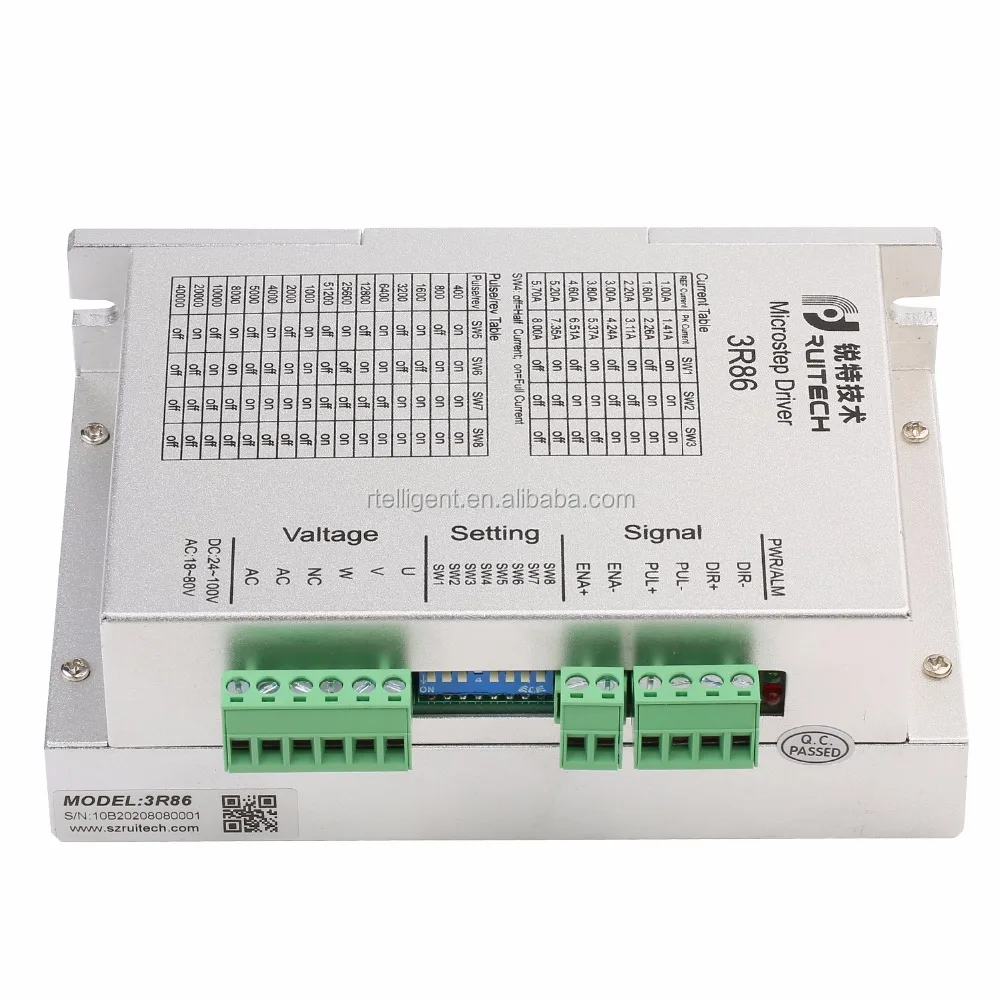
| \t Setting of micro-stepping level number | \t SW5-SW8, the four DIP switches, are used to select the 16 micro-stepping levels in total. Please select correct micro-stepping level according to the drive panel and ensure that the drive does not act during the setting. |
| \t Output current setting | \t SW1-SW3, the three DIP switches, are used to select the 8 output current levels in total. Please select correct current division according to the drive panel and ensure that the drive does not act during the setting. |
| \t Auto semi-current | \t The function of auto semi-current of drive can be set via SW4. “off” represents that the idle current is set as the half of operating current, while “on” means that the idle current is equal to the operating current. For general purpose, SW4 shall be set as off for lower heating and higher reliability of motor and drive. The current reduces by half automatically about 0.4s after the pulse train stops. |
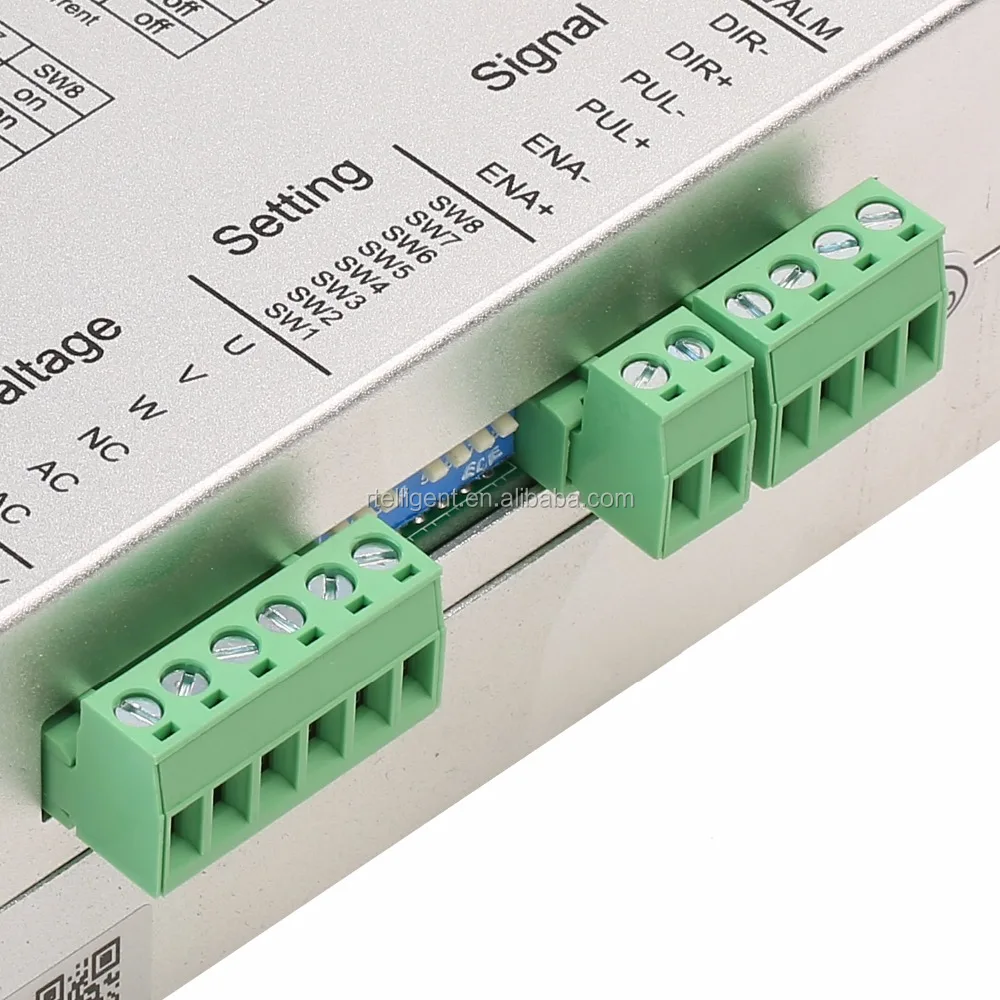
| \t Signal interface | \t PUL+ and PUL- are the positive and negative terminals of control pulse signal respectively; DIR+ and DIR- the positive and negative terminals of direction signal; and ENA+ and ENA- the positive and negative terminals of enable signal. |
| \t Motor interface | \t U, V and W correspond to the winding wires U, V and W of motor. The rotation direction of motor can be changed by exchanging any two of these winding wires. NC is disconnected and ungrounded, not required to be connected. |
| \t Power interface | \t Both the DC and AC supply can be employed. 24-100V DC or 20-80V AC is recommended for the operating voltage of R86. The power is greater than 200W. |
| \t Indicator | \t The drive has two indicators: the green one, a power indicator and twinkle upon the power up of drive; the red one, a fault indicator and twinkle in case of overvoltage and overcurrent. The red indicator goes off only when the fault is removed. The fault of drive can only be removed when the drive is powered on and enabled again. |