
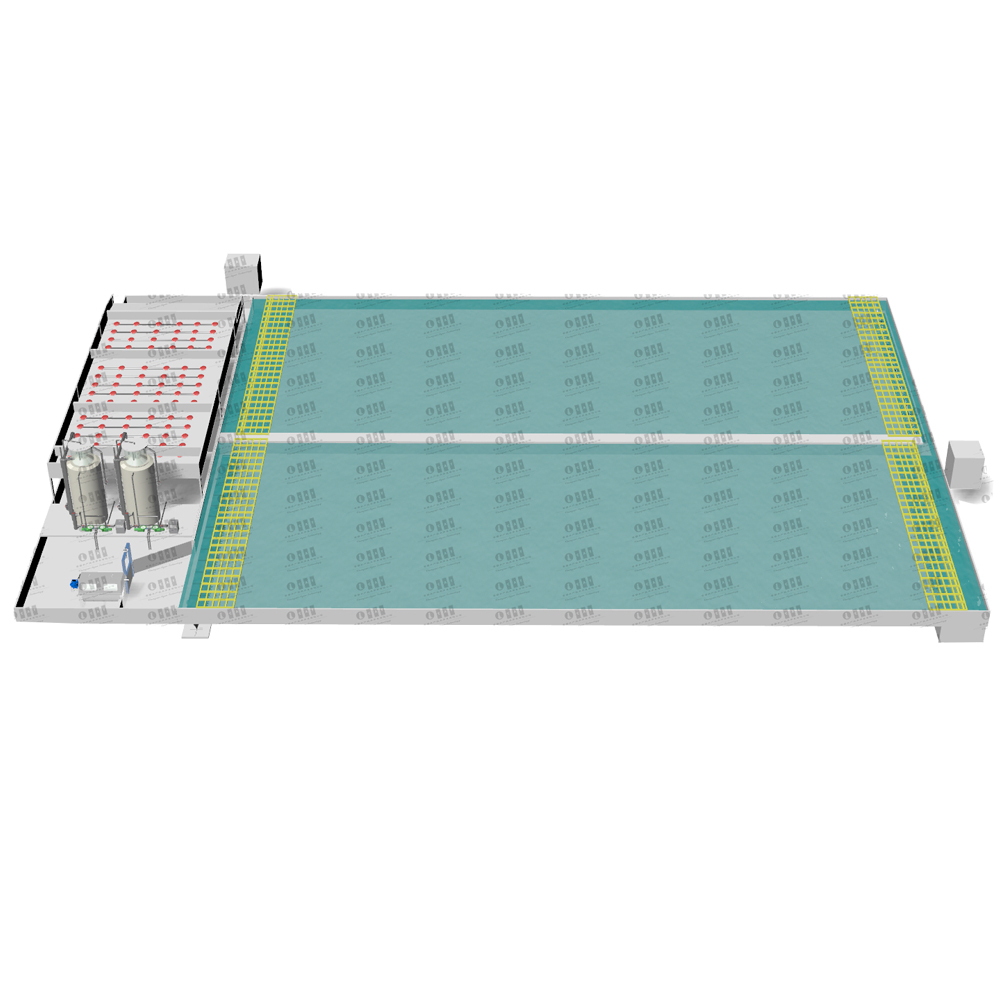
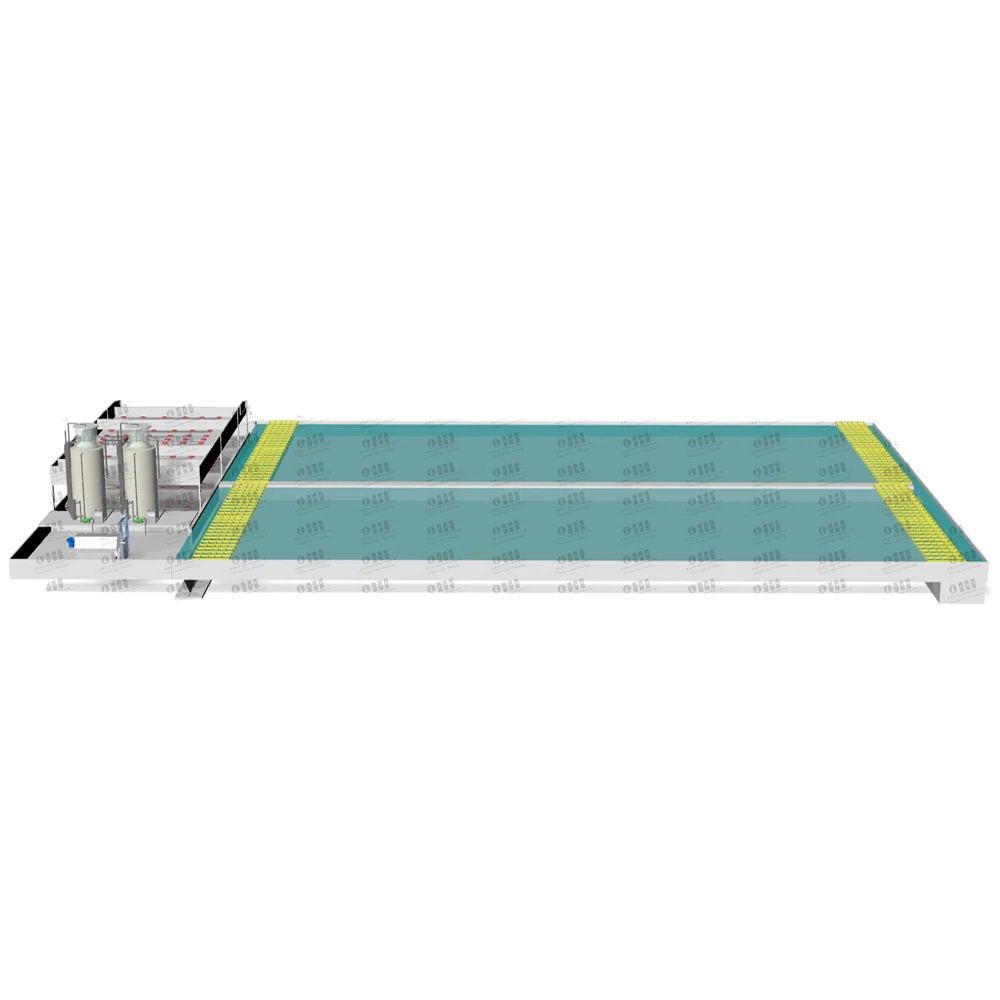
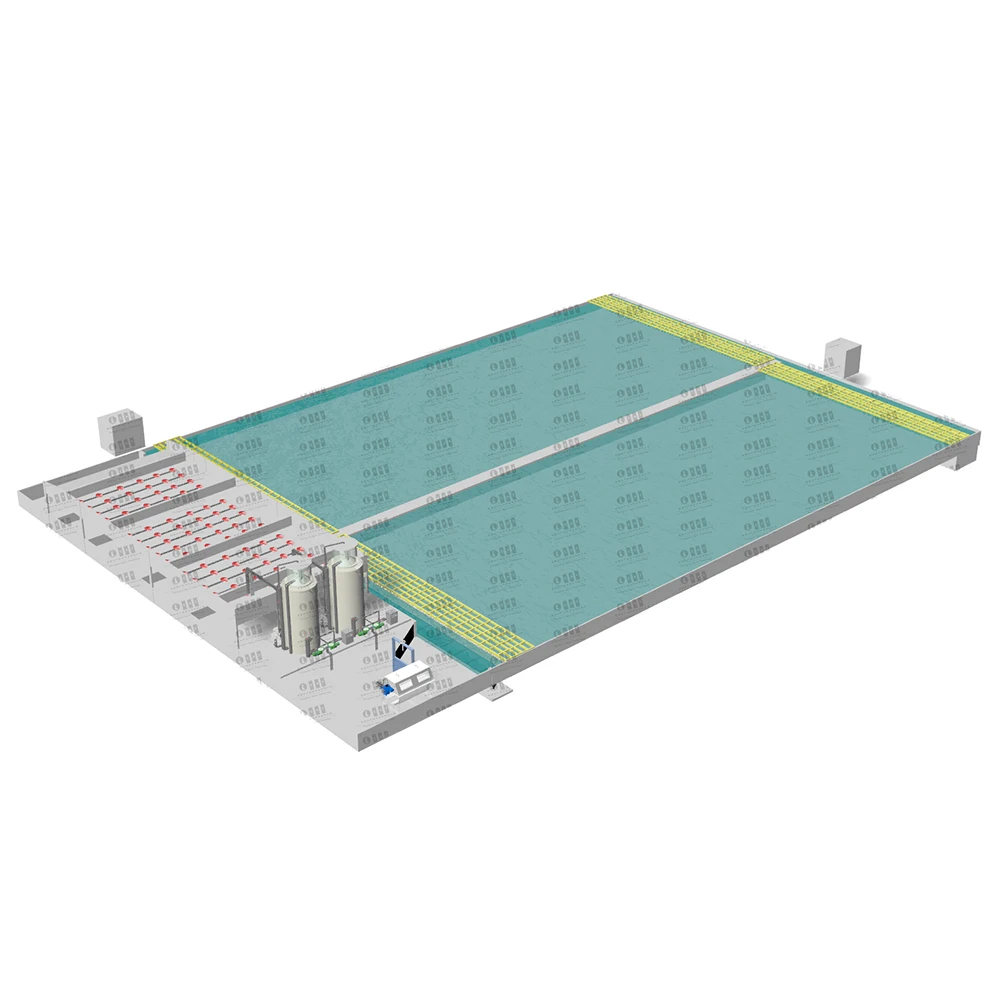
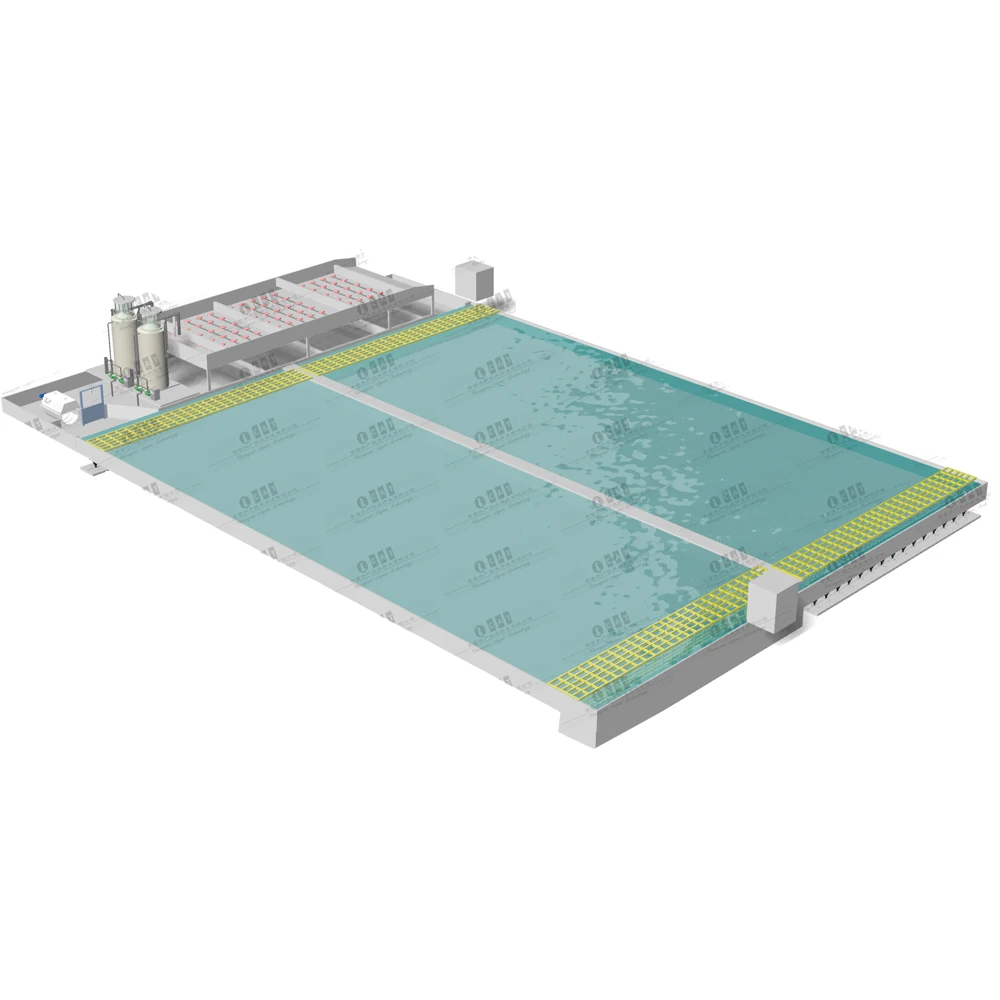
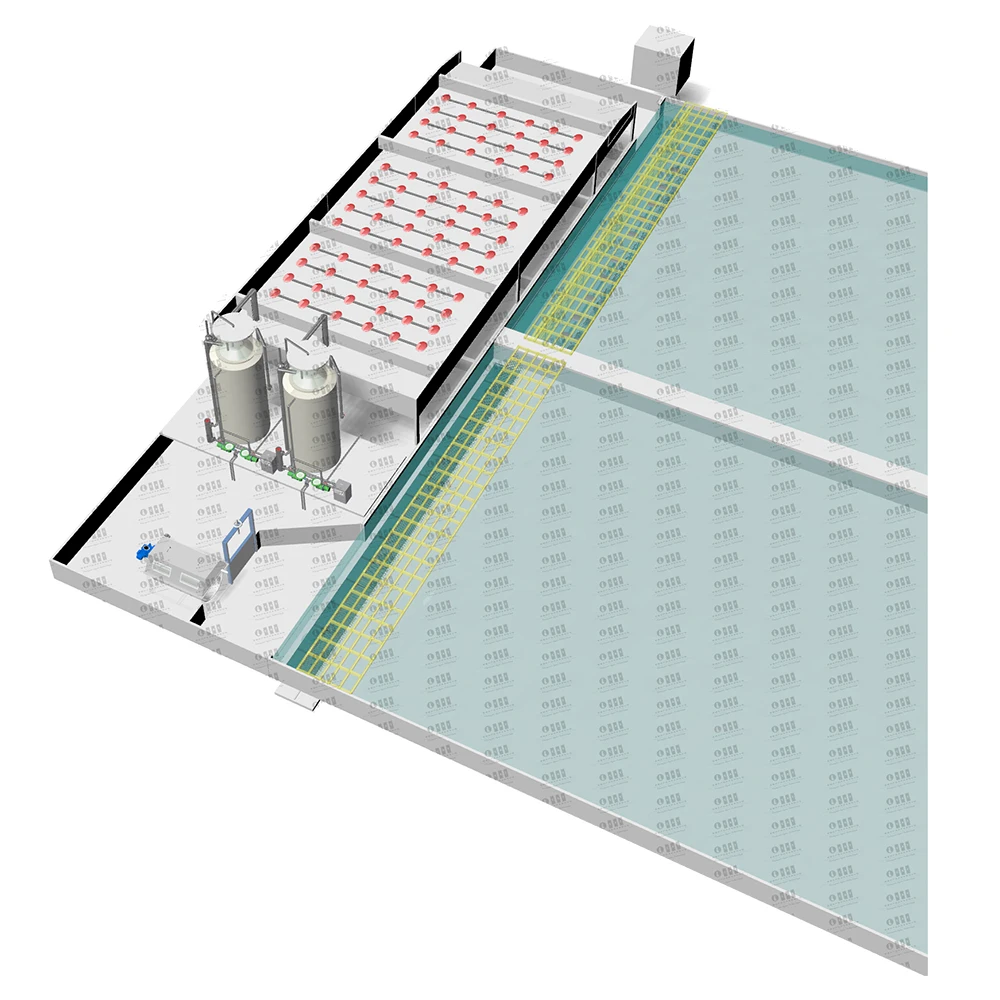
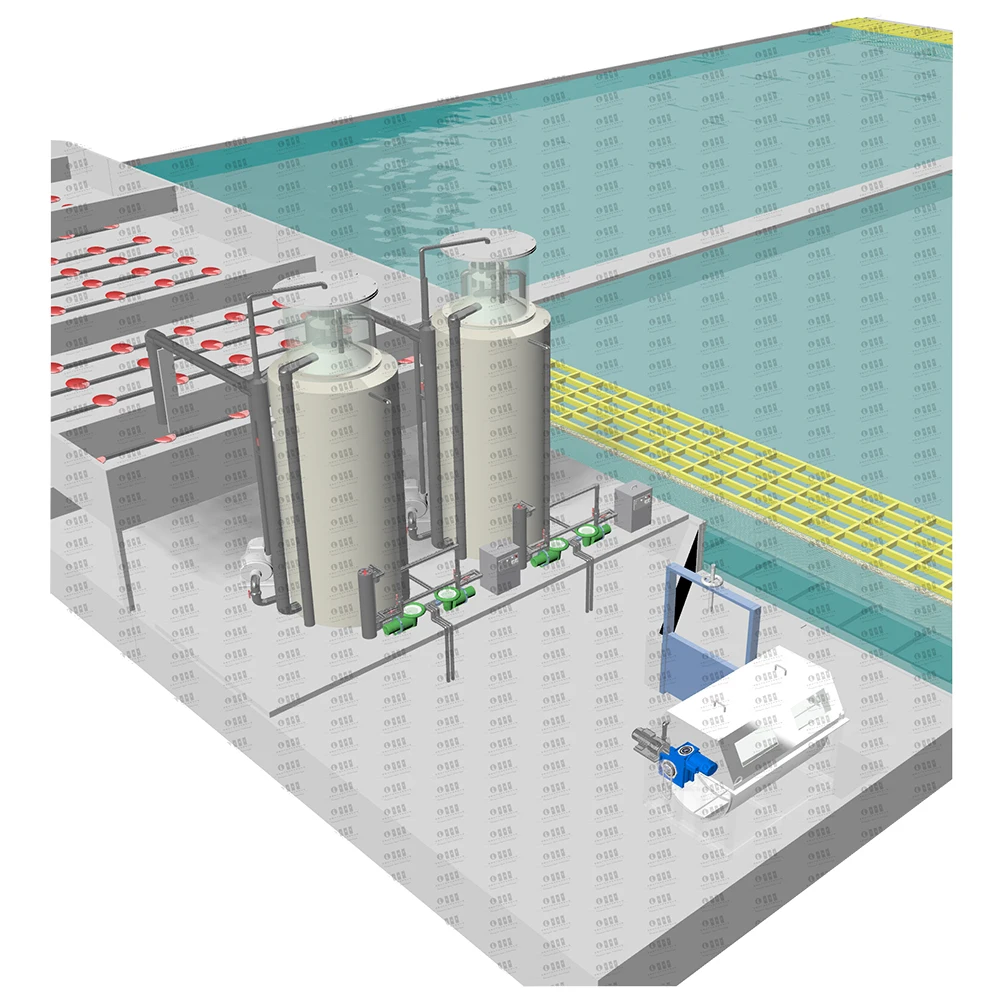
Оборудование для аквакультуры Raceway Ras, система фильтрации рыбных прудов тилапии
- Категория товара: >>>
- Поставщик (Оптовый магазин): Xiamen,Chongrui,Aqua,Technology,Co.,Ltd.
Поделиться:
Описание и отзывы
Характеристики
Products Description
Recirculating Aquaculture System (RAS) series of treatment processes is utilized to maintain water quality in intensive fish farming operations. These steps of Recirculating Aquaculture System (RAS) are often done in order or sometimes in tandem.
Recirculating Aquaculture Systems mainly use certain engineering facilities and water treatment facilities to recover treated discharge water and establish standardized aquaculture management techniques based on major environmental factors (including water flow, water quality, air) and feeds from aquaculture processes. At the same time, artificial regulation is carried out to provide a suitable growth environment for breeding organisms, achieving high quality, high yield and high efficiency.
In the system,after leaving the vessel holding fish the water is first treated for solids before entering a bio filter to convert ammonia, next degassing and oxygenation occur, often followed by heating/cooling and sterilization. Each of these processes can be completed by using a variety of different methods and equipment, but regardless all must take place to ensure a healthy environment that maximizes fish growth and health.The advantages of RAS farming are outstanding. The breeding cycle is shortened by 2-6 times, and the yield per unit area is 20-80 times higher than that of traditional pond culture, and the product quality is controllable.
Recirculating Aquaculture Systems mainly use certain engineering facilities and water treatment facilities to recover treated discharge water and establish standardized aquaculture management techniques based on major environmental factors (including water flow, water quality, air) and feeds from aquaculture processes. At the same time, artificial regulation is carried out to provide a suitable growth environment for breeding organisms, achieving high quality, high yield and high efficiency.
In the system,after leaving the vessel holding fish the water is first treated for solids before entering a bio filter to convert ammonia, next degassing and oxygenation occur, often followed by heating/cooling and sterilization. Each of these processes can be completed by using a variety of different methods and equipment, but regardless all must take place to ensure a healthy environment that maximizes fish growth and health.The advantages of RAS farming are outstanding. The breeding cycle is shortened by 2-6 times, and the yield per unit area is 20-80 times higher than that of traditional pond culture, and the product quality is controllable.
Product Feature
Item | Name | Specification |
1 | Sand Filter | 5~50m3/h |
2 | Drum Filter | 50~500m3/h |
3 | Protein Skimmer | 3~200m3/h |
4 | UV Sterilizer | 2~100m3/h |
5 | Ozone Generator | 1~1000g/h |
6 | Bio Filter | 5~30m3/h |
7 | Oxygen Generator | 3~150L/min |
8 | Oxygen Cone | 10~140m3/h |
9 | Fish Tank | Custom |
10 | ...... | ...... |
Sand Fiter
Drum Filter
Protein Skimmer
UV Sterilizer
Ozone Generator
Bio Filter
Oxygen Generator
Oxygen Cone
FRP Fish Tank
Recommend Products
Product packaging


Why Choose Us
CAT-Chongrui Aqua Technology Co.,Ltd as the most professional whole RAS manufacture, designer and consult company, we offer the best quality Reliable goods to our honored customers that through the whole world, no matter the big Ocean Park like North Korea National Ocean park, Moscow Ocean Park etc. or the Shanghai Pudong Ocean park, Weihai Ocean Park, Chengdu Ocean Park, Chong Qing Ocean park, Luoyuan Ocean park, CAT people always spend 100% hard work try to offer customer the best goods and services.
We are professional and leading manufacturer over 20 years.
We produce and export high quality Recirculating Aquaculture System (RAS) which have a very high reputation among our customers.
Our RAS sells very well among our distributors in Europe, America, Mideast, Australia ,South Africa and Asia.
We are professional and leading manufacturer over 20 years.
We produce and export high quality Recirculating Aquaculture System (RAS) which have a very high reputation among our customers.
Our RAS sells very well among our distributors in Europe, America, Mideast, Australia ,South Africa and Asia.
Our Service
Pre-Sales Service
* Inquiry and consulting support.
* Sample testing support.
* View our Factory.
After-Sales Service
* Training how to instal the machine, training how to use the machine.
* Engineers available to service machinery overseas.
Certifications


FAQ
Q: WHAT ARE YOUR FACTORY'S MAIN BUSINESS & PRODUCTS ?
A: Main Business: Advanced RAS design, units production, delivery, installation and training for the Ocean Park, Aquarium, Modern Fish farm, Lab Room and all other related products:
1.Mechanism Filter like SAND FILTER ,DRUM FILTER, BAG FILTER, CARTRIDGE FILTER, CRAWLER MICROFILTER etc.
2.Protein Skimmer with Fresh water model & sea water model, and also the simple type & advanced model
3. Bio-filter, multi types like Bed type (Move Bed & Fix Bed), Bucket type, Cone type
4.UV-Sterlizer, PVC body and Stainless steel ones
5. Ozone Generator & Oxygen Generator
6. PP & FRP fish Tank
7. Incubators
8.Truck Modified
9.Mobile Trailer
10. Lab Aquaculture system
11.Other related goods
Q: HOW LONG AND HOW TO GET SAMPLE FROM US ?
A: 1. We can make as per your request, please provide us artwork in PDF to follow, you only need to pay for the transportation freight and the products sample cost, but once bulk order placed, we will refund you the sample cost.
2. Sample lead time: about 15 days.
3. Sample payment: we accept sample payment sent by West Union, paypal, T/T.
Q: HOW TO ORDER?
A: Please send us your inquiry by E-mail, our sales person will reply you very soon and learn your request. We may take some time for communication to confirm the proposal and then we would make a quotation or proposal for you to place the order:
1.Production information: Quantity, Specification (size, material, color, logo and packing requirement), Artwork or Sample will be the best for us to develop for you.
2. Lead time required.
3.Shipping information: Company name, Address, Phone number, Destination seaport/airport, nominated forwarder contacts.
Q: WHAT IS YOUR TERMS OF PAYMENT ?
A:Payment<=1000USD, 100% in advance. Payment>=1000USD, 30% T/T in advance ,balance before shippment.
Payment recommend according to the Alibaba platform as you can pay by credit card, but if you prefer other ways like TT, west union, Money Gram, Credit Card are all acceptable.
If you have another question, pls feel free to contact us.
A: Main Business: Advanced RAS design, units production, delivery, installation and training for the Ocean Park, Aquarium, Modern Fish farm, Lab Room and all other related products:
1.Mechanism Filter like SAND FILTER ,DRUM FILTER, BAG FILTER, CARTRIDGE FILTER, CRAWLER MICROFILTER etc.
2.Protein Skimmer with Fresh water model & sea water model, and also the simple type & advanced model
3. Bio-filter, multi types like Bed type (Move Bed & Fix Bed), Bucket type, Cone type
4.UV-Sterlizer, PVC body and Stainless steel ones
5. Ozone Generator & Oxygen Generator
6. PP & FRP fish Tank
7. Incubators
8.Truck Modified
9.Mobile Trailer
10. Lab Aquaculture system
11.Other related goods
Q: HOW LONG AND HOW TO GET SAMPLE FROM US ?
A: 1. We can make as per your request, please provide us artwork in PDF to follow, you only need to pay for the transportation freight and the products sample cost, but once bulk order placed, we will refund you the sample cost.
2. Sample lead time: about 15 days.
3. Sample payment: we accept sample payment sent by West Union, paypal, T/T.
Q: HOW TO ORDER?
A: Please send us your inquiry by E-mail, our sales person will reply you very soon and learn your request. We may take some time for communication to confirm the proposal and then we would make a quotation or proposal for you to place the order:
1.Production information: Quantity, Specification (size, material, color, logo and packing requirement), Artwork or Sample will be the best for us to develop for you.
2. Lead time required.
3.Shipping information: Company name, Address, Phone number, Destination seaport/airport, nominated forwarder contacts.
Q: WHAT IS YOUR TERMS OF PAYMENT ?
A:Payment<=1000USD, 100% in advance. Payment>=1000USD, 30% T/T in advance ,balance before shippment.
Payment recommend according to the Alibaba platform as you can pay by credit card, but if you prefer other ways like TT, west union, Money Gram, Credit Card are all acceptable.
If you have another question, pls feel free to contact us.


